
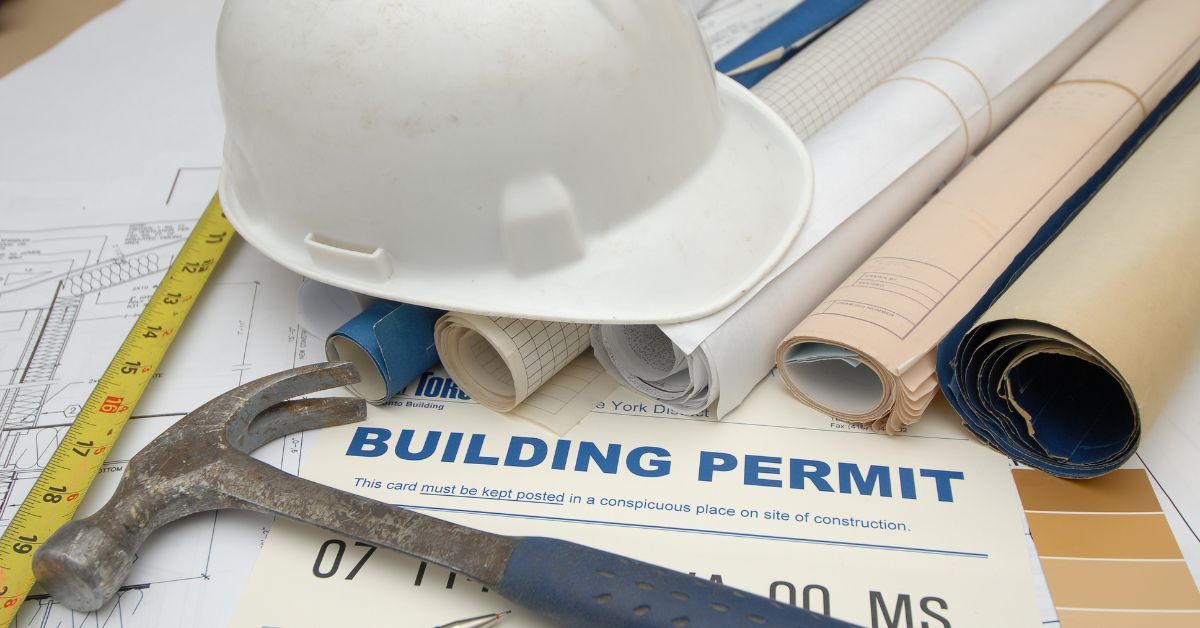
What Permits Are Required to Build a Community Pool in Texas?
Building a swimming pool for an HOA, apartment community, master-planned development or other shared residential property is very different from building a pool in someone’s backyard.
The pool itself may be only one part of the project. Depending on the location and scope, your plans may need to address building permits, health department review, accessibility, electrical and plumbing work, fencing, drainage, equipment rooms, restrooms and final inspections before residents ever enter the water.
If you're planning a new community pool construction l in Texas , understanding these requirements early can prevent permitting issues from becoming expensive construction delays.
Here’s what developers, HOA boards and property managers should know before getting started.
Do You Need a Permit to Build a Community Pool in Texas?
Yes. In most cases, construction of a new community or commercial swimming pool requires permits and plan review from the authority having jurisdiction.
Exactly which permits you need depends on where the property is located and what is included in the project.
Texas Department of State Health Services (DSHS) rules establish minimum standards for public swimming pools and spas. The state currently incorporates portions of the 2021 International Swimming Pool and Spa Code (ISPSC) for the construction, alteration, renovation, enlargement and repair of commercial pools and spas.
But state requirements are only part of the picture.
Cities, counties, local health departments and other authorities can also be involved in reviewing and approving a project.
For example, Collin County specifically requires a New Public Swimming Pool/Spa Construction permit for public, HOA and apartment pools located in areas under its permitting jurisdiction.
That is why one of the first questions during community pool planning should be:
Who has jurisdiction over this property, and what does that jurisdiction require?
What Permits and Approvals May Be Required?
There isn't one universal "Texas community pool permit." A project can involve several separate approvals.
Depending on your location and design, these can include:
Commercial or public swimming pool construction permit
Building permit
Health department plan review
Electrical permit
Plumbing permit
Mechanical or gas permit
Site development or grading approval
Accessibility review
Fence or pool enclosure approval
Pre-opening health inspection
Final building inspections
Certificate of Occupancy or operational permit
Not every project will require every item on that list.
A relatively simple HOA pool may have a much different approval process than a large amenity center containing a pool, spa, splash pad, restrooms, clubhouse and equipment building.
Why Does the Pool Design Need to Be Developed Before Permitting?
A community pool permit usually involves much more than submitting the shape and dimensions of the pool.
Reviewing authorities need enough information to determine whether the entire aquatic facility complies with applicable requirements.
That can mean showing details for the pool itself as well as:
Pool layout and dimensions: Plans may identify water depths, steps, benches, ladders, entry points and other features.
Deck and surrounding areas: Review can extend to deck dimensions, slopes, drainage and circulation around the pool.
Mechanical systems: Pumps, filters, circulation systems, drains, suction outlets and chemical treatment equipment can all be part of the review.
Electrical systems: Lighting, bonding, grounding and electrical equipment must be incorporated into the construction documents.
Pool enclosure: Fence heights, gates, self-closing and self-latching mechanisms and access control can affect approval.
Accessibility: Accessible routes and accessible means of entering the water may need to be incorporated into the design.
Support facilities: Restrooms, equipment rooms, showers, drinking fountains, shade structures or an amenity building can add another layer of permitting.
Austin provides a good real-world example. Its commercial swimming pool submittal requirements call for construction documents showing items such as the pool and deck, exiting system, pool enclosure, gates, accessible routes and pool-access equipment. Plans must also be submitted for health department approval.
The important takeaway is simple: permitting should influence the design from the beginning rather than being treated as paperwork completed after the design is finished.
Does a Community Pool Need Health Department Approval?
Community pools frequently fall under public or semi-public aquatic facility requirements.
Texas DSHS notes that state and local health departments, local code enforcement offices and other governmental jurisdictions are involved in the safety and sanitation oversight of public swimming pools and spas.
Local processes vary.
In Austin, for example, public and semi-public aquatic facilities go through three major health-related stages:
Site plan review
Pre-opening inspection
Permit to operate
Plans must be approved before construction, and newly constructed facilities must complete the applicable pre-opening inspection before use.
This is an important distinction for developers accustomed to residential pool construction.
Finishing construction doesn't necessarily mean the community pool can immediately open.
Required inspections and operating approvals should be incorporated into the project schedule.
What Are the Accessibility Requirements for Community Pools?
Accessibility should also be addressed during design rather than added after construction.
Texas accessibility standards include requirements for swimming pools, wading pools and spas where those standards apply. For covered swimming pools, the Texas Accessibility Standards generally require accessible means of water entry, with requirements varying based on pool configuration and size.
For example, the standards state that swimming pools generally require at least two accessible means of entry, although pools with less than 300 linear feet of pool wall may qualify for an exception requiring only one accessible means. Acceptable methods can include pool lifts and sloped entries, among other specified options.
Accessibility can extend beyond entering the water.
The design may also need to consider accessible routes to the pool, gates, restrooms, amenities and other portions of the facility.
These requirements can have real design implications. The location of a pool lift or sloped entry can affect deck layouts, circulation and even the overall shape of the pool.
What Are the Fence and Gate Requirements?
The pool enclosure is another component that shouldn't be designed as an afterthought.
Texas Health and Safety Code Chapter 757 contains requirements related to pool yard enclosures for certain multiunit rental properties and property owners associations.
It also places ongoing responsibilities on applicable property owners and associations. For example, covered owners and property owners associations must inspect pool yard enclosures, gates and self-closing and self-latching devices at least once every 31 days.
That is a useful example of why community pool design should consider more than opening day.
The facility needs to be designed for long-term operation, maintenance and safety, not simply construction.
Are Community Pool Projects Subject to Accessibility Registration and Inspection?
Some Texas projects may also fall under the Texas Department of Licensing and Regulation's Architectural Barriers requirements.
Recent project records illustrate how accessibility review becomes part of actual aquatic projects.
For example, the Jersey Village Community Pool, registered with TDLR in July 2026, lists an estimated construction cost of $5.74 million for a new outdoor community pool, equipment building and accessible family restroom.
At a different scale, a 2025 Texas apartment swimming pool renovation was registered at an estimated $100,000, involving demolition of the existing pool and portions of the deck, construction of a new pool and deck, and installation of new filtration equipment.
These aren't intended as estimates for what your pool will cost. They illustrate just how much the scope of a "community pool project" can vary.
A neighborhood amenity pool, apartment renovation and municipal aquatic facility can all involve pools while having completely different design, permitting and construction requirements.
How Long Does Community Pool Permitting Take?
There isn't a single statewide timeline.
The schedule depends on the jurisdiction, complexity of the project, completeness of the construction documents and whether reviewers request revisions.
That makes permitting an important part of your preconstruction schedule.
A common mistake is creating a desired opening date and working backward based almost entirely on construction time.
Instead, the schedule should account for:
Design → engineering → plan preparation → jurisdictional review → revisions → permit issuance → construction → inspections → opening approval
If an HOA wants its pool ready for summer, for example, waiting until shortly before the desired construction start date to begin permitting can put unnecessary pressure on the entire project.
What Can Delay a Community Pool Permit?
Many delays aren't caused by the pool itself. They happen because one part of the overall facility doesn't coordinate with another.
Common issues can include incomplete construction documents, accessibility conflicts, equipment specifications that don't match the plans, fence and gate problems, drainage questions, electrical revisions or changes requested by the reviewing authority.
Changes made after permits are issued can create additional problems if they require revised plans or another round of review.
For developers and HOA boards, this is one reason to bring your commercial pool contractor into the project early.
The pool contractor can coordinate with the owner, architect, engineer, general contractor and other project stakeholders before construction begins.
Who Is Responsible for Getting the Permits?
That depends on how the project is structured.
The owner, developer, general contractor, architect, engineer and pool contractor may each be responsible for different portions of the permitting process.
On a large master-planned community, for example, the pool may be part of a much larger amenity center project being coordinated by a general contractor.
An HOA replacing an existing community pool could have a completely different arrangement.
The important thing is to establish responsibility early.
Before construction begins, your team should know:
Which jurisdiction regulates the property?
Which permits are required?
Who prepares each set of plans?
Who submits each application?
Who responds to plan-review comments?
Who schedules inspections?
What approvals are required before construction starts?
What inspections are required before residents can use the pool?
Answering those questions early helps prevent responsibility gaps later.
Start Permitting During the Community Pool Design Process
Permitting a community swimming pool can seem complicated because you're not dealing with just one set of requirements.
You may be coordinating state pool standards, local building codes, health department requirements, accessibility standards, electrical and plumbing requirements, fencing rules and project-specific site conditions at the same time.
The easiest way to manage that complexity is to make permitting part of the community pool design and preconstruction process from day one.
Pack Custom Pools works with developers, HOAs, builders and property stakeholders to design and construct custom swimming pools and community aquatic spaces throughout Central Texas.
If you're considering a new community pool, HOA amenity pool or commercial swimming pool project, contact Pack Custom Pools in Georgetown, Texas to discuss your project, site requirements and construction goals.
Frequently Asked Questions
Do HOA pools need permits in Texas?
Yes, HOA and community swimming pools will generally require applicable construction permits and approvals from the authority having jurisdiction. Requirements vary by location. Collin County, for example, specifically categorizes HOA and apartment pools under its New Public Swimming Pool/Spa Construction permitting process.
Are HOA pools considered public pools in Texas?
A community or HOA pool can fall within Texas rules governing public swimming pools depending on the facility and its use. The applicable regulatory classification should be confirmed with the local authority having jurisdiction before design and construction begin.
Does a community pool need to be ADA accessible?
Accessibility requirements depend on the facility and applicable laws and standards. When accessibility standards apply, the pool and surrounding facility may require accessible routes and an approved means of water entry, such as a compliant pool lift or sloped entry.
Does a new community pool need an inspection before opening?
Typically, applicable final inspections and operational approvals must be completed before the facility opens. Austin, for example, requires public and semi-public aquatic facilities to complete its applicable pre-opening inspection and permitting process before use.
Should you hire a commercial pool builder before applying for permits?
Bringing a commercial pool contractor into the project during design can help coordinate pool specifications, equipment, construction requirements and permitting considerations with the architect, engineer, developer or general contractor. Early coordination can also reduce the likelihood that construction documents need substantial pool-related revisions later.
References
Texas Department of State Health Services - Public Swimming Pools and Spas: Laws and Rules
Texas DSHS Pool Laws and Rules
Texas Administrative Code - 25 TAC Chapter 265, Subchapter L
Texas Public Swimming Pool and Spa Rules
Texas Health and Safety Code - Chapter 757, Pool Yard Enclosures
Texas Pool Yard Enclosure Requirements
Texas Department of Licensing and Regulation - Texas Accessibility Standards
Texas Accessibility Standards for Swimming Pools
City of Austin - Pool, Spa and Interactive Water Feature Inspections
Austin Public Pool Permitting and Inspection Process
Collin County - Development Services Permitting FAQs
Collin County Public and HOA Pool Permitting